





We are here to automate your business using the latest hardware and software technologies. Business automation is a new trend that will help you control your business more efficiently and save money on staff.
We don’t charge you any subscription fee for using booking system.
Let your clients book services through mobile app or web 24/7.
Let your clients use phones to open doors or turnstiles.
Replace cashiers and save money on staff.
Manage all clients and check the history of their visits.
Add different types of tickets for group reservations: eg. Adult ticket, Child ticket, etc. Tickets can be used with or without prepayments.
Invites to rebook, marketing emails, smart campaigns, and more.
Bookla has all the tools for the continuous development of your business.
From just 2.5% per transaction. It includes all processing and payout costs.
No monthly fee
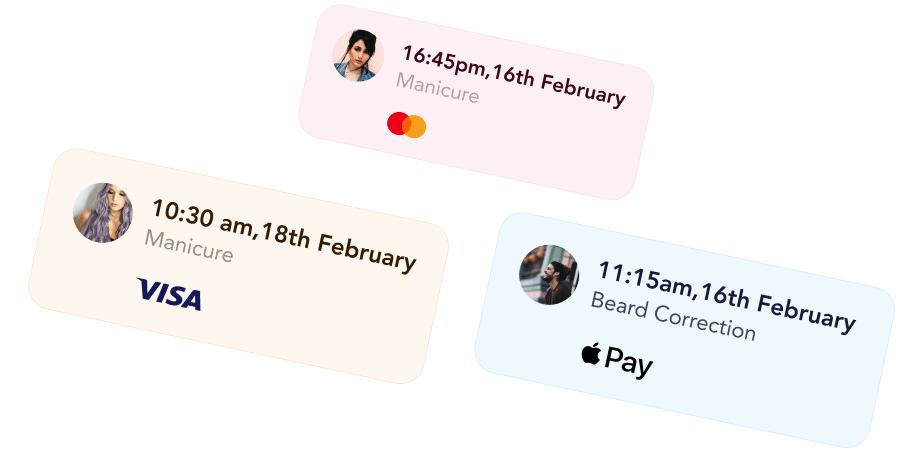
We work with different types of businesses.

Paragliding, helicopter tours, bungee jumping, hot air ballooning.

Theme parks, adventure parks, ski resorts, aqua parks.

Sun beds rental, swimming pools, table booking.
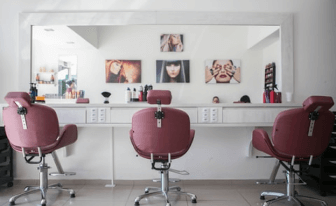
Hair salon, nail salon, barbershop, waxing salon, tanning studio.

Booking system for bowling clubs.

Booking system for any types of dental services.

Booking system for escape rooms and escape games.
Fields bookings, private trainings, group trainings, memberships.

Ticketing, private and group lessons.

Museums, exhibitions and art galleries.

Private and group trainings, equipment rental, corporate events.

Pet sitting, training courses, cosmetic procedures, visits to the vet.

Tennis, padel, table tennis, badminton, beach tennis.
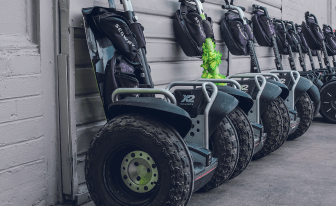
Manage private and group tours. Accept pre-payments.

Gym, yoga, crossfit, pilates, fitness club.

Ticketing, private and group lessons.

Fits any kind of water parks and water sports.

Private estate tours, premium tastings, and winemaker dinners.
More features that will help to analyze and grow your business.
Any employee can manage appointments from mobile phone.
Generate promo codes and discounts for your customers.
Let new clients discover you in Bookla marketplace free of charge.
Track your booking statistics, sales, individual staff performance, client payment history, and much more.
Let your clients buy subscriptions and use them in Bookla app.
Make recurring reservations by setting the frequency rules of the reservation.
What our clients are saying.

The Bookla team has listened to our wishes and delved into our situation to deliver as complete a service experience as possible to the end user. Thanks to the responsive customer service staff, it is possible to get answers to unclear questions, as well as solve unexpected problems that arise for customers when purchasing tickets.
Miks Dzenis, Director of Space Education Center
Check client’s case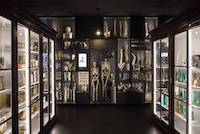
We will definitely use Bookla in the future when there will be no epidemiological restrictions. It helps us to organize our daily work and avoid situations when there are too many people on the exposition that disturbs clients to enjoy the museum.
Rūta Žiaugre, RSU museum specialist
Check client’s case
We want to say a big Thank You to the Bookla team for their successful cooperation. The Bookla team has made the daily life of our customer service specialists easier. All reservations to the Water Amusement Park and the Gym of the Sigulda sports centre are made in the mobile application Bookla. Bookla helps us to stay in line with epidemiological requirements and control the people flow in the training premises as well as in changing rooms. The Bookla team consists of responsive and creative people. It's always a pleasure to cooperate!
Santa Bludova, marketing specialist at “Sigulda sports centre”
Check client’s case
A comprehensible, functional app for the service provider to use on a daily basis! For us, as a beauty service provider, everything is well and convenient! Customers are also satisfied! Let's wait for more options and system posibilities!
“Unika Annika studio”, Annika

As a service provider, I really like the comprehensibility and simplicity of my personal calendar in the Bookla application, which allows me to plan my time easily and quickly.
Guna Lūsiņa, Certified trainer and physiotherapist

An ideal option for active people. Convenient, fast, efficient
“Šarmante”, Agita